
Your duct system is what connects your HVAC equipment to every room in your home. A well-designed, properly installed duct system makes your home consistently comfortable and helps your equipment perform efficiently over its full service life. A poorly designed one creates hot and cold spots, drives up your energy bills, and causes comfort problems that no amount of servicing the equipment itself can fix.
In New Orleans, where homes range from pre-war shotguns and doubles to newer construction and everything in between, ductwork design is not a one-size-fits-all project. This guide covers how a proper duct system is designed, what installation involves, what common problems look like, and when your ductwork may be the root cause of ongoing HVAC issues.
What Ductwork Does
Your HVAC system’s air handler or furnace conditions the air inside your home, but it has no way to move that conditioned air anywhere on its own. Ductwork is the network of channels that carries cooled or heated air from the equipment through supply registers into each room, and pulls return air back to the equipment for another pass through the filter and coil.
This circulation is continuous while the system runs. A well-designed duct system delivers the right volume of air to each room, returns an equal volume back to the equipment, and loses as little conditioned air as possible along the way. In New Orleans, where attic temperatures in summer can exceed 130 degrees, a duct system with poor insulation or significant leakage is losing a substantial portion of its cooling capacity before the air ever reaches your rooms.
How a Duct System Is Designed
Ductwork design is not a matter of replicating what was there before or estimating by square footage. A proper design process involves specific calculations:
Manual J Load Calculation
Before any duct design begins, the heating and cooling load for every room in the home must be calculated. This is called a Manual J calculation. It accounts for the room’s dimensions, ceiling height, insulation levels, window area and orientation, and internal heat sources. The output is the BTUs per hour that each room requires to maintain comfort on the hottest summer day and coldest winter day at design conditions for the New Orleans area.
This room-by-room output determines not just how much total cooling capacity the system needs, but exactly how much airflow each room requires.
Manual D Duct Design
Manual D is the ACCA industry standard for residential duct system design. It uses the airflow requirements from Manual J to determine the correct size for every duct run, from the main supply trunk coming off the air handler through each branch to the individual room registers.
The design accounts for friction losses that accumulate over every foot of duct length, every elbow, every transition fitting, and every register grille. The goal is a balanced system where every room receives the airflow it needs without creating excessive static pressure in the duct system.
Static pressure matters because when it gets too high, the blower motor has to work harder to move air, efficiency drops, and the equipment wears faster. When it is too low, velocity is insufficient to distribute air effectively from the registers into the room.
Equipment Sizing
The HVAC equipment the duct system serves must also be correctly sized. An oversized system short-cycles, reaching the thermostat set point too quickly and shutting off before completing a full humidity removal cycle. In New Orleans, where indoor humidity is often the primary comfort problem even when the temperature is manageable, a short-cycling oversized system is a chronic source of discomfort.
Proper equipment sizing comes from the Manual J load calculation. Any contractor who sizes a replacement system based only on what was previously installed, without running an updated load calculation, risks perpetuating a sizing mistake.
Types of Ductwork
Sheet Metal
Rigid galvanized steel ductwork is the most durable option and is used for main trunk lines and larger supply and return branches. It maintains its cross-sectional area regardless of age, does not compress or kink, and lasts the life of the building when properly sealed and protected from moisture. Sheet metal is more expensive to fabricate and install than flexible duct but is the right choice for main distribution runs.
Flexible Ductwork
Flexible duct, commonly called flex duct, is used for the final branch runs connecting the main trunk to individual supply registers. It is less expensive, easier to route through tight spaces in attics and walls, and adequate when installed correctly.
The critical requirement for flex duct is that it must be pulled straight, fully extended, and secured at both ends and along the run. Flex duct installed with sags, bends, or compression loses airflow capacity dramatically. A section of flex duct that is kinked or partially compressed can restrict airflow by 50% or more compared to a properly installed run.
In New Orleans area homes, improperly installed or degraded flex duct in attics is one of the most common causes of room-level comfort complaints.
Fiberboard Ductwork
Duct board is a rigid insulated fiberglass product that can be fabricated into duct shapes on-site. It provides built-in insulation and is used in some applications. Fiberboard ducts can degrade if moisture gets in, and the interior surface can provide a substrate for mold growth, which is a more significant concern in Southeast Louisiana’s humid climate than in drier parts of the country.
Duct Insulation in New Orleans
All ductwork in unconditioned spaces must be insulated, and in New Orleans, almost all ductwork runs through attic spaces that become extremely hot in summer. At minimum, ducts in attics should have R-6 insulation. R-8 is better given how extreme attic conditions get here from June through September.
Poor or deteriorated attic duct insulation is one of the most direct causes of high energy bills and rooms that never cool properly in Southeast Louisiana. Cool supply air traveling through an inadequately insulated duct in a 130-degree attic picks up heat before it ever reaches the register. Inspecting and replacing attic duct insulation is often a cost-effective improvement that significantly reduces cooling costs.
What Ductwork Installation Involves
New Construction
In a new home, ductwork is installed before walls and ceilings are closed in. This allows duct runs to be planned and executed in straight, efficient paths with proper support and clearances. The process includes:
- Installing the main supply trunk from the air handler
- Running branch ducts to each room based on the Manual D design
- Installing return air grilles and return ductwork back to the air handler
- Sealing all joints and connections with mastic sealant or approved metal tape
- Insulating all ducts in unconditioned spaces to the appropriate R-value
- Balancing the system after startup to verify each room is receiving the designed airflow
Duct Replacement or Modification in Existing Homes
Replacing or significantly modifying ductwork in an occupied home is more involved because finished surfaces have to be accessed and restored. In older New Orleans homes, this often means working around existing framing systems, attic access challenges, and historic interior finishes that need to be protected.
In homes where the existing duct system is fundamentally flawed, such as those with severe undersizing, extensive leakage, or poor layout from the original installation, full replacement is often more cost-effective than continuing to patch and modify a system that cannot be made to perform correctly without starting over.
Common Duct Problems and Their Impact
Disconnected ducts: A duct that has pulled apart at a connection dumps conditioned air directly into the attic, wall cavity, or crawl space. In an attic during a New Orleans summer, that means conditioned air at 55 degrees is being delivered directly into 130-degree air, representing a near-total loss of that zone’s cooling. Disconnected ducts cause severe room comfort problems and dramatically increase energy consumption.
Leaking connections: Even without a complete disconnect, connections that were never sealed with mastic or that have had tape fail over time leak continuously. Duct leakage in typical residential systems is estimated at 20 to 30% of total airflow. In New Orleans, that leakage is delivering cooled air into one of the hottest attic environments in the country.
Kinked or sagging flex duct: Improperly supported or installed flex duct can restrict airflow by half or more compared to a straight run. This raises system static pressure, starves individual rooms of conditioned air, and forces the blower to work harder.
Undersized ductwork: Ducts designed for smaller original equipment and never updated when larger systems were installed cannot carry the required airflow. This raises static pressure throughout the system and creates comfort problems throughout the home.
Inadequate return air: A system that cannot pull enough return air back to the air handler is always working against itself. Single central return systems in homes where bedroom doors are frequently closed are a common source of this problem. Adding return air pathways or door undercuts can resolve it without major ductwork modifications.
Duct Cleaning
Over years of operation, dust, debris, and other material accumulate inside duct surfaces. Duct cleaning removes this buildup, improves airflow through the system, and reduces the amount of debris circulating through your home’s air. In Southeast Louisiana, where mold spores and allergens in the air are a persistent concern, keeping duct interiors clean is particularly worthwhile.
An AC tune-up is also a good time to have airflow through the duct system evaluated. Our technicians can identify developing issues with restricted airflow, excessive static pressure, or disconnected sections before they become major problems.
When Ductless Is the Better Answer
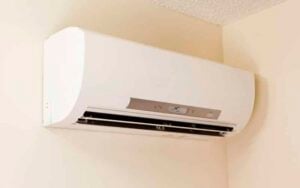
For some New Orleans homes, particularly older ones without existing ductwork or those where duct installation in finished historic interiors would be prohibitively expensive or destructive, a ductless mini split system eliminates the ductwork question entirely. Ductless systems deliver conditioned air directly from the indoor head into the room, with no duct losses and no static pressure issues.
For targeted problem rooms, additions that cannot be connected to the main system, or whole-home coverage in homes where ductwork is not feasible, ductless mini splits are a strong solution worth a serious look.
Ready to Talk About Your Ductwork in New Orleans?
Southern Air has been serving Southeast Louisiana since 1984. Whether you are dealing with poor airflow, high energy bills, rooms that never cool properly, or you simply want to know whether your duct system is performing the way it should, our team can evaluate it and give you honest answers with upfront pricing.
We also offer flexible financing for ductwork projects. Check our specials page for current promotions.
Call us at (504) 217-5191 or schedule online to book a service visit.