
If one room in your house feels like a sauna while another is perfectly cool, you’re dealing with one of the most common HVAC complaints homeowners have. Uneven temperatures are frustrating, and in a climate like southeastern Louisiana’s, they can make daily life genuinely uncomfortable. The good news is that most causes of uneven heating and cooling are fixable. If your room temperature feels lower (or higher) than your thermostat setting, one or more of these seven solutions will likely resolve it. And if the problem runs deeper, our AC repair and heating repair teams are here to help.
1. Check and Replace Your Air Filter
A clogged air filter is one of the most overlooked causes of uneven temperatures. When airflow is restricted, your HVAC system struggles to push conditioned air to every room equally. The rooms closest to the air handler may feel fine while the ones at the end of the duct runs run hot or cold. Check your filter first. If it’s gray and matted with dust, replace it immediately. Filters should be swapped out every one to three months depending on your home and lifestyle.
2. Look for Blocked or Closed Vents
It sounds simple, but blocked supply or return vents are a surprisingly common cause of temperature imbalance. Furniture pushed against a vent, a rug covering a floor register, or a vent that was accidentally closed can all disrupt airflow throughout the system. Walk through each room and confirm that every vent is open, unobstructed, and pointed in a direction that allows air to circulate freely. Closing vents in unused rooms is a common habit that actually creates pressure problems in the duct system, so keep them open.
3. Have Your Ductwork Inspected
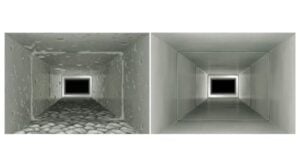
Leaky or poorly designed ductwork is one of the biggest culprits behind rooms that never seem to reach the right temperature. If your ducts have gaps, disconnected sections, or were improperly sized during installation, a significant portion of your conditioned air is being lost before it ever reaches its destination. A professional duct inspection can identify where the leaks are and whether your duct layout is actually capable of delivering balanced airflow.
4. Consider a Zoning System
If your home has areas with consistently different temperature needs, such as a sunroom that heats up quickly, a bonus room above the garage, or a two-story layout where the upstairs is always warmer, a zoning system can give you precise control over each area. HVAC zoning uses multiple thermostats and motorized dampers inside the ductwork to direct conditioned air where it’s actually needed, rather than treating the whole house as a single zone. It’s one of the most effective long-term solutions for homes with persistent hot and cold spots.
5. Add a Ductless Mini Split for Problem Areas
Some spaces simply can’t be served well by a central system, especially additions, converted garages, sunrooms, or rooms at the far end of a home. A ductless mini split provides direct, independent heating and cooling for those problem areas without tapping into your existing ductwork. Mini splits are energy-efficient, quiet, and can be installed without major construction. They’re an excellent option when one room consistently refuses to cooperate with the rest of the house.
6. Improve Your Home’s Insulation and Sealing
Your HVAC system can only do so much if the building envelope is working against it. Attic insulation that’s degraded or insufficient allows heat to pour in during summer and escape during winter, making it nearly impossible for your system to maintain consistent temperatures. Air sealing around windows, doors, and electrical penetrations also matters. These are home performance upgrades rather than HVAC repairs, but they have a direct impact on how evenly your system can heat and cool your home.
7. Schedule a Professional System Assessment
If you’ve checked the basics and the temperature imbalance persists, the problem may lie with the HVAC system itself. An undersized or oversized air conditioner is a frequent cause. When a system is too large, it cools quickly but cycles off before it can properly dehumidify and distribute air evenly. When it’s too small, it runs constantly but can never quite reach the set temperature in every room. A professional assessment includes measuring your home’s load requirements and verifying that your equipment is properly matched to the space.
A AC tune-up or heater tune-up can also reveal efficiency issues, refrigerant problems, or component wear that contribute to uneven performance. Our technicians will give you a straight answer about what’s causing the problem and what it will take to fix it.
Getting Your Home Comfortable Again
Uneven temperatures aren’t just annoying. They’re a sign that your system isn’t working as efficiently as it should be, which means higher energy bills and more wear on the equipment over time. Whether the fix is something simple like a new filter or something more involved like a ductwork correction or a mini split installation, Southern Air can help. Give us a call and let’s get every room in your home feeling the way it should.