If your HVAC system seems to cycle at the wrong times, your home never quite reaches a consistent temperature, or your energy bills are higher than they should be for a system that otherwise seems to work fine, your thermostat’s location could be the problem. Thermostat placement is one of those things that seems minor but has a surprisingly significant effect on comfort and efficiency.
This guide explains why placement matters, where a thermostat should and should not go in a New Orleans area home, and what to do if yours is in the wrong spot.
How a Thermostat Controls Your HVAC System
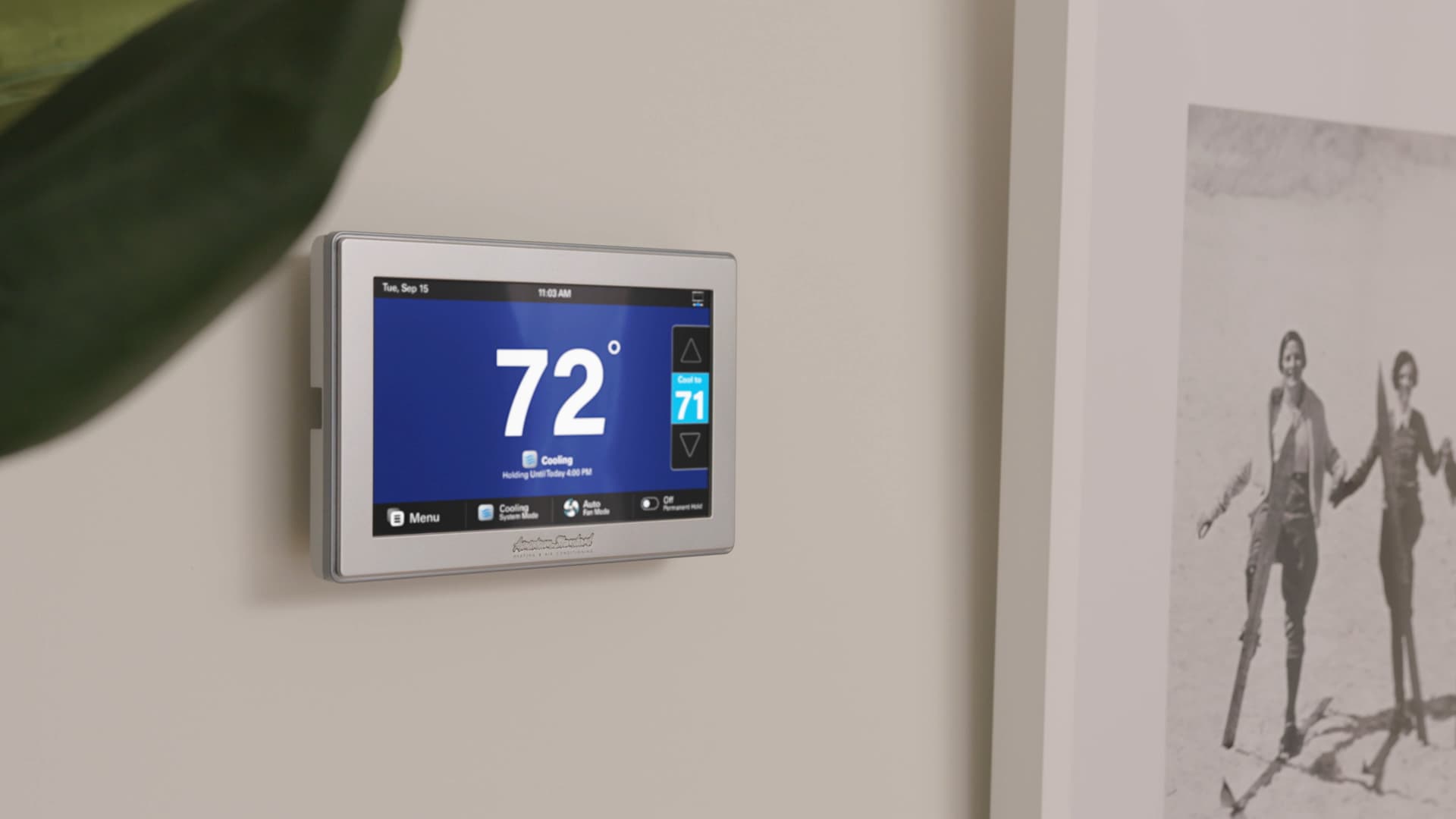
Your thermostat does one thing: it measures the temperature at its location and signals the HVAC system to run or stop based on whether that temperature is above or below the set point.
That sounds simple, and it is. The problem is that your thermostat can only measure temperature where it is. It has no idea what the temperature is in your bedroom, your kitchen, or the back bedroom that always seems too warm. It assumes that wherever it sits is representative of the whole home, and it controls your entire HVAC system based on that assumption.
When a thermostat is placed in a location that does not reflect the actual average temperature of the home, every control decision the system makes is based on inaccurate information. The result is a system that runs too long, not long enough, or cycles at the wrong times, and rooms throughout the house that never feel right.
Where a Thermostat Should Be Located
The goal is to find a spot that is as representative of the home’s average temperature as possible, where the thermostat is not being influenced by anything that creates an artificially high or low reading.
An interior wall in a central, frequently used area of the home. The most common recommendation is a hallway or open living area near the center of the home’s floor plan. This gives the thermostat exposure to air that reflects conditions throughout the house rather than conditions in one corner or zone.
About five feet from the floor. This height is roughly at the level where occupants spend most of their time and where temperature is most relevant to comfort. It avoids the temperature stratification that occurs very close to the floor or near the ceiling.
On a wall that is not adjacent to an exterior wall. Interior walls stay closer to the home’s average temperature. Exterior walls fluctuate more with outdoor conditions and can skew the thermostat’s readings.
In a room with good air circulation. Rooms that receive regular airflow from the HVAC system’s supply registers give the thermostat the most representative reading of what the system is actually delivering to the home.
Where a Thermostat Should Not Be Located
Near Windows or Exterior Doors
Sunlight streaming through a window heats the air and surfaces near it. A thermostat sitting in or near a sun-exposed window sees elevated temperatures that have nothing to do with the rest of the home. It tells the HVAC system to run, the system cools the house, and by the time the thermostat location is satisfied, the rest of the home may be too cold.
In New Orleans, where sun exposure is intense from spring through fall and the angle of the sun can shift significantly throughout the day, a west-facing window can heat the air near a thermostat dramatically in afternoon hours.
Cold drafts from exterior doors have the opposite effect. The thermostat reads a lower temperature from the cold air infiltrating at the door, triggers the heating system, and the rest of the home gets overheated.
Near Supply Air Registers
Supply registers deliver conditioned air directly from your HVAC system. A thermostat placed near or above a supply register measures the temperature of the conditioned air coming out of the duct rather than the ambient temperature of the room. When the system is heating, the thermostat reads unusually warm air and shuts the system off prematurely. When cooling, it reads unusually cold air and does the same thing. Either way, the system cycles too short and never properly conditions the rest of the home.
In a Hallway With Poor Circulation
Hallways seem like logical thermostat locations because they are central and neutral, and in many homes they are a reasonable choice. But closed-off hallways with little air circulation can develop temperature pockets that do not reflect the rest of the home. If bedroom doors are usually closed and the hallway gets little airflow from the system, the thermostat may be reading a stale, un-representative temperature for much of the day.
In Direct Sunlight
This is distinct from being near a window. A thermostat mounted on a wall that receives direct sun exposure through a skylight, a glass door, or any opening will read the radiant heat from the sun as actual room temperature. On a sunny afternoon in New Orleans, the difference between the radiant heat at a sun-exposed wall and the actual air temperature in the room can be significant.
Near Heat-Generating Appliances
Lamps, televisions, computers, and other electronics all generate heat. A thermostat near any of these devices will read the ambient heat they produce and trigger the cooling system accordingly, even if the rest of the home is comfortable.
Kitchen adjacency is worth considering as well. The heat generated by cooking can influence a thermostat on the other side of a wall, especially in older New Orleans homes where the kitchen may be directly connected to the central living space without a full wall between them.
In Unused Rooms
A thermostat in a guest room, a formal dining room, or any space that is closed off for most of the day will read the temperature of that isolated room rather than the rest of the home. Isolated rooms develop their own temperature profiles, often running warmer or cooler than the occupied spaces, and a thermostat in one will make poor control decisions for the whole home.
In the Attic, Garage, or Any Unconditioned Space
This one is less common with thermostats and more common with temperature sensors connected to smart thermostats or zoning systems. Any sensor in an unconditioned space reads conditions entirely unrelated to indoor comfort and should not be used as a primary control point.
How Poor Thermostat Placement Affects Your Energy Bills
When a thermostat reads a false temperature, it either runs the HVAC system more than necessary or not enough. Both scenarios increase energy costs.
A thermostat near a sunny window runs the AC more on sunny afternoons than the home actually needs, adding unnecessary run hours and electricity consumption. A thermostat near a cold draft in winter may run the heat longer than necessary.
Over a full cooling season in New Orleans, where the AC runs heavily from late March through October, even a modest overcooling effect from a poorly placed thermostat adds up to meaningful extra energy spending on your Entergy bill.
What to Do If Your Thermostat Is in the Wrong Spot
If your thermostat is in a clearly poor location, moving it is a straightforward electrical job that involves running a new low-voltage wire to the preferred location and capping the old one. Our team handles thermostat installation and relocation, and can evaluate your current location and recommend the best alternative.
If you are also considering upgrading to a smart thermostat, doing the relocation and the upgrade at the same time makes sense. A home automation capable thermostat with remote sensing or multi-room temperature averaging can partially compensate for a less-than-ideal placement by factoring in readings from multiple locations in the home.
Smart Thermostats and Placement
Smart thermostats offer features that can help address imperfect placement:
Remote sensors. Many smart thermostat systems support wireless remote sensors that can be placed in specific rooms. The thermostat averages temperature readings from multiple sensors rather than relying solely on its own location. This is especially useful in New Orleans homes with multiple occupied zones at different distances from the thermostat.
Occupancy detection. Some smart thermostats use occupancy sensors to prioritize temperature in occupied rooms and relax control in unoccupied ones. This does not fix a bad thermostat location but can improve overall system behavior.
Scheduling. Programmed schedules allow the thermostat to adjust set points at predictable times. If your thermostat is near a west-facing window and reads warm every afternoon, a schedule that anticipates that period can partially compensate.
That said, none of these features are a substitute for a well-placed thermostat. Start with placement first, then layer in smart features for additional control and efficiency.
Is Your Thermostat Causing Your HVAC Problems?
If your home has persistent comfort issues that do not seem to match the system’s operating pattern, thermostat placement is worth evaluating. Our technicians look at thermostat location as part of every AC tune-up and can flag locations that are likely affecting system performance.
Our Shield of Protection maintenance plan includes seasonal tune-ups, priority scheduling, and 20% off any service calls, including thermostat work.
Ready to Talk About Your Thermostat in New Orleans?
Southern Air has been serving Southeast Louisiana since 1984. Whether you need a thermostat relocated, upgraded to a smart model, or your HVAC system evaluated for comfort issues that may be related to control placement, our team provides upfront pricing and honest recommendations.
Call us at (504) 217-5191 or schedule online to book a visit.