
Your home’s ductwork moves conditioned air to every room, which means it also has the potential to move whatever is growing or accumulating inside those ducts throughout your living space. In a climate as humid as southeastern Louisiana’s, mold, bacteria, and other microbial growth inside duct systems are real concerns rather than hypothetical ones.
That’s where air duct disinfectant treatments come in. If you’ve been searching for a clean air duct treatment for your home, this guide will help you understand what these treatments do, when they’re appropriate, and what to expect from the process. Our indoor air quality team at Southern Air is here to help you make an informed decision.
What Is Air Duct Disinfectant Treatment?
Air duct disinfectant treatment involves applying an EPA-registered antimicrobial or sanitizing agent to the interior surfaces of your duct system. The goal is to kill or reduce microbial contamination, including mold spores, bacteria, and in some cases viruses, that may have taken hold inside the ductwork. These treatments are typically performed as part of, or following, a professional duct cleaning service rather than as a standalone procedure.
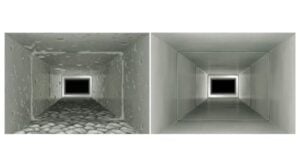
It’s important to understand that disinfectant treatment is not a substitute for cleaning. If your ducts contain significant debris, dust, or biological material, that needs to be physically removed first. Applying a disinfectant to a dirty duct surface has limited effectiveness. A thorough air quality assessment can help determine what’s actually present in your system and what type of service is appropriate.
When Is Duct Disinfectant Treatment Warranted?
Not every home needs a duct disinfectant treatment, and we’ll never recommend one if it’s not genuinely useful for your situation. There are specific circumstances where it makes sense.
If your home has experienced water intrusion, flooding, or sustained humidity problems that led to visible mold growth inside the ductwork, disinfection is appropriate after the contamination has been physically removed. In the aftermath of water damage, particularly common in the New Orleans area, duct systems can become reservoirs for microbial growth that continues to affect your indoor air quality long after the visible water is gone.
Homes that have experienced a sewage backup, rodent infestation, or other biological contamination in or near the duct system are also good candidates for disinfection. Similarly, if you or a family member have immune system sensitivities or chronic respiratory issues, and there’s reason to believe your duct system is contributing to poor indoor air quality, a treatment may offer meaningful relief.
After a renovation that generated significant dust and debris, or when moving into a previously occupied home with an unknown maintenance history, a duct cleaning and disinfection can give you a fresh start and peace of mind about what’s circulating through your air supply.
How the Treatment Process Works
The process begins with a professional inspection of your duct system to document what’s present and assess the extent of any contamination. If cleaning is needed first, that’s performed using professional equipment that captures debris without releasing it into your living space.
Once the ducts are clean, the EPA-registered disinfectant is applied to the interior duct surfaces, typically using a fogging or spray application method that allows the product to reach the surfaces throughout the system. The product is given time to dwell before the system is restored to operation. Our technicians use products that are safe for occupied homes when applied correctly and that meet EPA requirements for use in HVAC systems.
The entire process for a standard home typically takes a few hours. We’ll give you a clear timeframe when we assess your system.
Pairing Duct Treatment with Broader Indoor Air Quality Improvements
Duct disinfection works best as part of a broader approach to indoor air quality rather than as an isolated fix. If conditions in your home allowed microbial growth to develop in the first place, addressing those root causes is essential.
Humidity control is often the most important factor in homes in southeastern Louisiana. A whole-home dehumidifier maintains indoor relative humidity at a level that discourages mold growth year-round, making it much less likely that treatment will be needed again in the future.
Upgrading your filtration is another meaningful step. Better filters capture more of the particulates and biological material that would otherwise recirculate through your system. We offer air filtration and air purification solutions that can be integrated directly into your existing HVAC system, including air scrubbers that actively treat the air as it circulates rather than simply capturing what passes through a filter.
What to Be Cautious About
The duct cleaning and disinfection industry has its share of companies that oversell services or use products not approved for use in HVAC systems. A few things to watch for: any company that quotes a whole-house duct cleaning for an unusually low flat fee without inspecting the system first is a red flag. Products used for duct disinfection should be EPA-registered for that specific application. If a company can’t name the product they’re using or show you the EPA registration, that’s a reason to look elsewhere.
At Southern Air, we’re transparent about what we’re recommending, what products we’re using, and why. If we don’t think a treatment is necessary for your situation, we’ll tell you that too.
Talk to Our Indoor Air Quality Team
If you have concerns about what’s in your duct system or about the overall air quality in your home, we’re ready to help you assess the situation and recommend a practical path forward. From IAQ testing to duct cleaning and disinfection to whole-home humidity control, Southern Air offers a full range of indoor air quality services for homes in the greater New Orleans area. Call us to get started.