
Baseboard heaters are a simple, quiet way to heat individual rooms, but they have real limitations. They heat slowly, they are expensive to operate, they cannot cool your home, and they offer no humidity control whatsoever. In Southeast Louisiana, where humidity is a year-round issue and cooling is far more important than heating, a system that only handles half the job is a poor long-term investment.
If your home currently uses baseboard heating and you are thinking about converting to central air, this guide covers what that project involves, what it costs, and what options make the most sense for a New Orleans area home.
Why Baseboard Heating Is a Poor Fit for Southeast Louisiana
Baseboard heaters use electric resistance coils to generate heat, drawing electrical current and converting it directly into warmth. There is no refrigerant cycle, no heat transfer, no combustion. That simplicity makes them inexpensive to install and easy to maintain, but it also makes them one of the least efficient ways to heat a home.
Electric resistance heating converts one unit of electricity into one unit of heat. A heat pump, by contrast, moves existing heat from one place to another and can deliver two to four units of heat for every unit of electricity consumed. In Southeast Louisiana’s mild winter climate, where temperatures rarely stay below freezing for long, heat pumps operate at near-peak efficiency for most of the heating season. The operating cost difference between baseboard heat and a heat pump in this climate is significant.
Beyond efficiency, baseboard heaters have no cooling function. In New Orleans, where you may need air conditioning from late March through October or longer, a system that does nothing during those months is providing value for only a fraction of the year. Converting to a system that handles both heating and cooling is almost always the better long-term investment for local homeowners.
What Does Converting Baseboard Heating to Central Air Involve?
The scope of a baseboard-to-central-air conversion depends on one key question: does your home have existing ductwork?
Homes With Existing Ductwork
If your home has functional ductwork from a previous central air system, or if ductwork was installed for cooling only and you just relied on baseboard heat for warming the home, the conversion is relatively straightforward. The existing ducts are evaluated for condition and sizing, the baseboard units are removed, and a central heat pump system is installed using the existing duct infrastructure.
In this scenario, the project costs are comparable to a standard AC installation with heating, typically $6,000 to $12,000 depending on system size, efficiency level, and whether any duct repairs or modifications are needed.
Homes Without Ductwork
If your home has no existing ductwork, the conversion becomes a more involved project. New ductwork needs to be designed and installed, which in a finished home means routing ducts through walls, ceilings, attic spaces, or crawl spaces and patching the surfaces afterward.
Full ductwork installation in an existing home typically adds $3,000 to $8,000 or more to the project cost depending on the home’s size and layout. Combined with the HVAC equipment, a full baseboard-to-ducted-central-air conversion in a home without existing ducts can run $10,000 to $20,000 or more.
For homes where ductwork installation is impractical or prohibitively expensive, a ductless mini split system is often the better path. More on that below.
Cost Breakdown: Converting Baseboard Heating to Central Air
| Scenario | Typical Total Cost |
|---|---|
| Home with existing ductwork | $6,000 to $12,000 |
| Home without ducts (ductwork + equipment) | $10,000 to $20,000+ |
| Ductless mini split alternative (per zone) | $3,000 to $5,500 |
| Multi-zone ductless system (whole home) | $10,000 to $18,000 |
These ranges include equipment, labor, and permits. Electrical work needed to support the new system is additional.
What System Should You Replace Baseboard Heat With?
Central Heat Pump With Ductwork
A ducted central heat pump is the closest equivalent to a traditional central air system. It uses a single outdoor unit and an indoor air handler connected to your home’s duct system to both cool and heat every room through the same vents.
For New Orleans area homes, a heat pump is almost always the right choice over a gas furnace for heating because of how mild our winters are. Heat pumps operate most efficiently when outdoor temperatures are above freezing, which describes the vast majority of winter days in Southeast Louisiana.
If your home already has ductwork in good condition, this is typically the most cost-effective path to whole-home heating and cooling.
Ductless Mini Split System
Ductless mini splits are the most practical alternative for homes without existing ductwork or where installing new ducts would be disruptive and expensive.
A multi-zone ductless system connects a single outdoor unit to multiple indoor heads, one per room or zone, each conditioning its space independently. No ductwork is needed. The connection between the outdoor and indoor units is a small conduit that runs through the wall, carrying refrigerant lines and electrical connections.
For New Orleans homes, ductless mini splits offer several advantages beyond avoiding ductwork:
- Variable-speed units excel at humidity control, running longer at lower speeds to remove more moisture from the air, which is a meaningful advantage in Southeast Louisiana’s climate
- Each zone is controlled independently, so you condition only the rooms you are using
- Modern heat pump mini splits are extremely efficient in the mild winters typical of the NOLA area
For a home currently heated by baseboard units in each room, switching to a multi-zone ductless system is a natural transition since the zone-by-zone control model is similar, just far more capable and efficient.
Hybrid Systems
Some homeowners opt for a hybrid approach: a central heat pump with ductwork for most of the home and a ductless mini split for a room or area that cannot be easily reached by the duct system. This is common in older New Orleans homes with additions that were not connected to the original ductwork.
Electrical Considerations
Baseboard heaters require dedicated electrical circuits. When you remove them, those circuits may be repurposed, modified, or simply capped off. The new central air or ductless system will require its own dedicated circuit or circuits.
If your home’s electrical panel is older or already at capacity, a panel upgrade may be part of the project. This is common in older New Orleans homes, particularly those built before the 1970s that have not had their panels updated. Panel upgrades typically run $1,500 to $3,500 depending on the current panel’s age and condition.
Any wiring that is removed or modified when baseboard heaters are taken out should be handled by a licensed electrician to ensure the work meets current code. Southern Air handles both HVAC and electrical work, so the full conversion can be managed under one project.
Removing the Baseboard Heaters
Baseboard heater removal involves disconnecting the units from their dedicated circuits, capping the wiring at the wall, and patching the wall surfaces. The units themselves are typically straightforward to remove, but the electrical work must be done properly to avoid leaving live wires in the wall.
If you are planning to repaint or renovate the rooms at the same time, this is a good opportunity to address any wall damage from the heater removal and any new thermostat or ductwork penetrations in a single phase of work.
Thermostat Upgrade
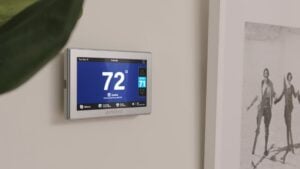
Replacing baseboard heaters with central air or a ductless system is also an opportunity to upgrade your temperature control. A smart thermostat or a home automation-integrated control gives you scheduling, remote access, and efficiency features that individual baseboard controls do not offer.
For a ductless system, each indoor head includes its own remote control and often a smartphone app, but a central smart thermostat can coordinate the zones if a compatible multi-zone controller is installed.
Is the Conversion Worth It in New Orleans?
Almost always yes, and for several reasons:
Lower operating costs. A heat pump system costs significantly less per unit of heat delivered than electric resistance baseboard heaters. In a mild climate like Southeast Louisiana’s, the operating cost savings accumulate quickly.
Year-round comfort. A heat pump both cools and heats, which baseboard units cannot. For homeowners currently using baseboard heat and window units or no cooling at all, moving to central air or a ductless system addresses all seasonal comfort needs in one project.
Better humidity control. Baseboard heaters add no moisture to the air and do nothing to remove it. A central AC or ductless system actively manages humidity, which is especially important in New Orleans.
Home value. Homes with central air command stronger buyer interest and appraisal values than those with baseboard-only heating.
Ready to Talk About Converting Your Home in New Orleans?
Southern Air has been serving Southeast Louisiana since 1984. Whether your home has existing ductwork or needs a complete ductless solution, our team can evaluate your situation and give you honest recommendations with upfront pricing.
We handle the full project including HVAC installation, electrical work, and thermostat setup. We also offer flexible financing and check our specials page for any current promotions.
Call us at (504) 217-5191 or schedule online to get started.